Dental Bridges in Pasadena, CA — Restore Your Smile
If you are living with a missing tooth, you already know how much it affects the way you eat, speak, and feel about your smile. At Joshua Dental, Dr. Joshua Lee offers dental bridges in Pasadena, CA as a fixed, natural-looking solution that restores both function and confidence — entirely in-house, with no referrals needed. We welcome new patients and accept most insurance, so getting started is straightforward.
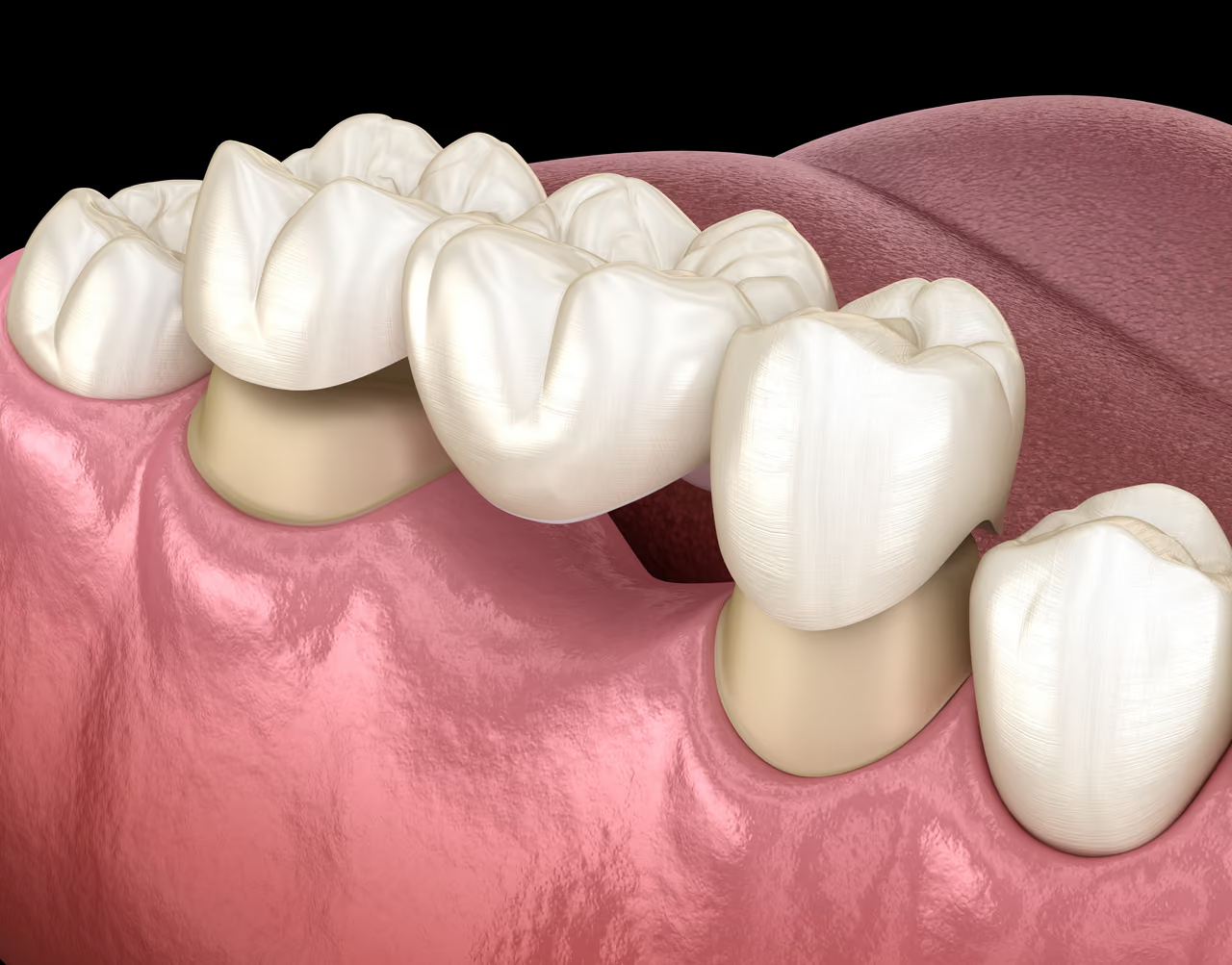
Part of our broader restorative and prosthodontics services, a dental bridge is a time-tested restoration that literally bridges the gap left by a missing tooth. It is cemented in place, feels like a natural tooth, and does not come in and out like a removable appliance.
Why Replace a Missing Tooth?
A missing tooth is more than a cosmetic concern. Left untreated, the gap can set off a chain of changes in your mouth that become harder and more costly to address over time.
What Happens If You Wait
When a tooth is lost, the jawbone beneath it no longer receives the stimulation it needs and begins to gradually resorb. Neighboring teeth, no longer held in position, start to drift and tilt into the open space. This shifting can alter your bite, create uneven wear on remaining teeth, and change the appearance of your face over time. Replacing the missing tooth with a fixed bridge dental solution helps preserve the alignment and health of your surrounding teeth and bone.
Benefits of Dental Bridges at Joshua Dental
A missing tooth bridge at Joshua Dental offers several meaningful advantages:
- Restored chewing and speaking ability — Eat the foods you enjoy and speak clearly without worrying about gaps or instability.
- Natural appearance — Bridges are crafted to match the color, shape, and size of your surrounding teeth so the result looks seamless.
- Fixed and secure — Unlike a removable partial denture, a bridge is cemented in place and stays put throughout your day.
- In-house care from one doctor — Dr. Lee handles your entire bridge procedure at our Pasadena office. No referrals, no unfamiliar faces, no fragmented care.
- Insurance accepted — We work with most insurance plans to help make treatment accessible. See our Insurance & Financing page for details.
Types of Dental Bridges We Offer
Most patients are candidates for a traditional fixed bridge, but Dr. Lee will recommend the right type based on your specific anatomy and goals.
- Traditional fixed bridge — The most common type. A prosthetic tooth (pontic) is held in place by dental crowns cemented onto the healthy teeth on either side of the gap.
- Cantilever bridge — Used when there is only one natural tooth adjacent to the gap available to serve as an anchor. Less common, but appropriate in select cases.
- Implant-supported bridge — For patients who want a bridge without altering adjacent teeth, an implant-supported option may be worth exploring. Learn more about our implant and bone restoration options.
Traditional Fixed Bridge vs. Implant-Supported Bridge
A traditional fixed bridge relies on the neighboring teeth as anchors, which means those teeth are prepared and fitted with crowns. It is a well-established approach that works well for most patients. An implant-supported bridge, by contrast, is anchored by titanium posts placed in the jawbone — preserving adjacent teeth and providing direct bone stimulation. Implant-supported options typically involve a longer treatment timeline and require sufficient bone density. If you are curious whether implants are right for you, our team can walk you through both paths during your consultation.
Dental Bridges vs. Dental Crowns
A dental crown restores a single damaged or weakened tooth — it does not replace a missing one. A bridge, on the other hand, uses crowns on the anchor teeth to support a prosthetic that fills the gap. If your tooth is still present but structurally compromised, a crown may be the right choice. If the tooth is gone, a bridge or implant-based solution is typically the appropriate path. Not sure which applies to you? That is exactly what a consultation is for.
If you are missing several teeth in a row or throughout your mouth, partial dentures may be another option worth discussing with Dr. Lee.
What to Expect: Your Bridge Treatment at Our Pasadena Office
Bridge treatment at Joshua Dental typically takes place over two appointments.
Step 1 — Examination and Planning
Dr. Lee begins with a thorough exam, including X-rays, to assess the health of your surrounding teeth, gums, and bone. This step confirms you are a good candidate and helps plan the exact dimensions of your bridge.
Step 2 — Tooth Preparation
The anchor teeth on either side of the gap are gently shaped to accommodate the crowns that will hold the bridge in place. Local anesthesia keeps you comfortable throughout this step.
Step 3 — Impressions and Temporary Bridge
Digital impressions are taken and sent to the dental lab where your permanent bridge is custom-fabricated. A temporary bridge is placed to protect your prepared teeth in the meantime.
Step 4 — Permanent Placement
Once your bridge is ready — typically within a couple of weeks — you return to have the temporary removed and your permanent bridge fitted, adjusted, and cemented in place. Most patients leave this appointment with a fully restored, natural-feeling smile.
Frequently Asked Questions About Dental Bridges in Pasadena
Question text goes here
Answer text goes here
How long do dental bridges last?
With proper care, dental bridges are designed to last 10 to 15 years or longer. Good oral hygiene — including brushing, flossing under the bridge, and regular professional cleanings — plays the biggest role in longevity. Dr. Lee will review care instructions with you at your placement appointment.
Does insurance cover dental bridges?
Many dental insurance plans provide partial coverage for bridges as a restorative procedure, though coverage levels vary by plan. Joshua Dental accepts most insurance and our team is happy to review your benefits before treatment begins. Visit our Insurance & Financing page for more details.
Is the procedure painful?
Most patients find bridge treatment very manageable. Local anesthesia is used during tooth preparation so you should not feel pain during the procedure. Some mild sensitivity or soreness in the days following preparation is normal and typically resolves on its own. If you have dental anxiety, Dr. Lee can discuss comfort options with you.
Am I a candidate for a dental bridge?
Good candidates for a dental bridge generally have one or more missing teeth with healthy natural teeth on either side of the gap to serve as anchors. Overall gum and bone health are also important factors. A thorough exam with Dr. Lee will confirm whether a bridge — or another restorative option — is the right solution for your situation.
Ready to Schedule Your Visit?