Bone Grafting for Dental Implants in Pasadena, CA
If you've been told you don't have enough bone for dental implants, you haven't reached the end of the road — you've reached the beginning of a solution. At Joshua Dental, Dr. Joshua Lee, DDS performs bone grafting for dental implants in Pasadena entirely in-house, which means no referrals, no extra offices to navigate, and no starting over with a provider who doesn't know your history. New patients are always welcome, and online scheduling makes it easy to take the first step.
A dental bone graft in Pasadena is the procedure that rebuilds the jawbone foundation your implants need to succeed. It is not an obstacle — it is what makes implants possible again.
Why Bone Grafting Is the Foundation of a Successful Implant
Dental implants are anchored directly into the jawbone, much like a natural tooth root. For that anchor to hold — and for the implant to last decades — the surrounding bone must be dense enough and wide enough to support it. When bone volume falls short, placing an implant without addressing it first can lead to implant failure. Bone grafting is the step that corrects the deficit and makes long-term success possible.
What Causes Bone Loss in the Jaw?
Jawbone loss is more common than most patients realize, and it can happen gradually enough that you don't notice it until a provider points it out. The most frequent causes include:
- Tooth loss — Once a tooth is gone, the bone that once surrounded its root begins to shrink because it no longer receives the stimulation it needs.
- Gum disease (periodontitis) — Advanced gum disease actively destroys the bone and tissue that support teeth.
- Tooth extraction without preservation — Removing a tooth without placing a socket preservation graft allows bone volume to drop quickly in the weeks and months that follow.
- Injury or trauma — Facial injuries can result in bone loss at the site of impact.
- Long-term denture wear — Dentures rest on the gums and do not stimulate the underlying bone, which continues to resorb over time.
What Happens If You Skip Bone Grafting?
Skipping bone grafting when it is needed is not a shortcut — it is a risk. Placing an implant into a jaw with insufficient bone volume significantly increases the likelihood of implant failure. The implant may not integrate properly with the surrounding tissue, it may shift or loosen over time, or it may fail entirely and need to be removed. Beyond implant stability, untreated bone loss can also change the shape of your face, cause neighboring teeth to shift, and make future treatment more complex and costly. Addressing bone loss now, before implant placement, protects your investment and your long-term oral health.
Benefits of Bone Grafting at Joshua Dental
Everything Done In-House — No Referrals, No Runaround
At many general dental practices, patients who need bone grafting are sent to an oral surgeon or periodontist at a separate location. That means new appointments, new waiting rooms, and care that is split between providers who may not communicate seamlessly. At Joshua Dental, Dr. Lee handles bone grafting, implant placement, and every step in between — all under one roof. You see the same doctor from your first consultation through your final implant restoration, and that continuity makes a real difference in both the experience and the outcome.
Socket Preservation After Tooth Extraction
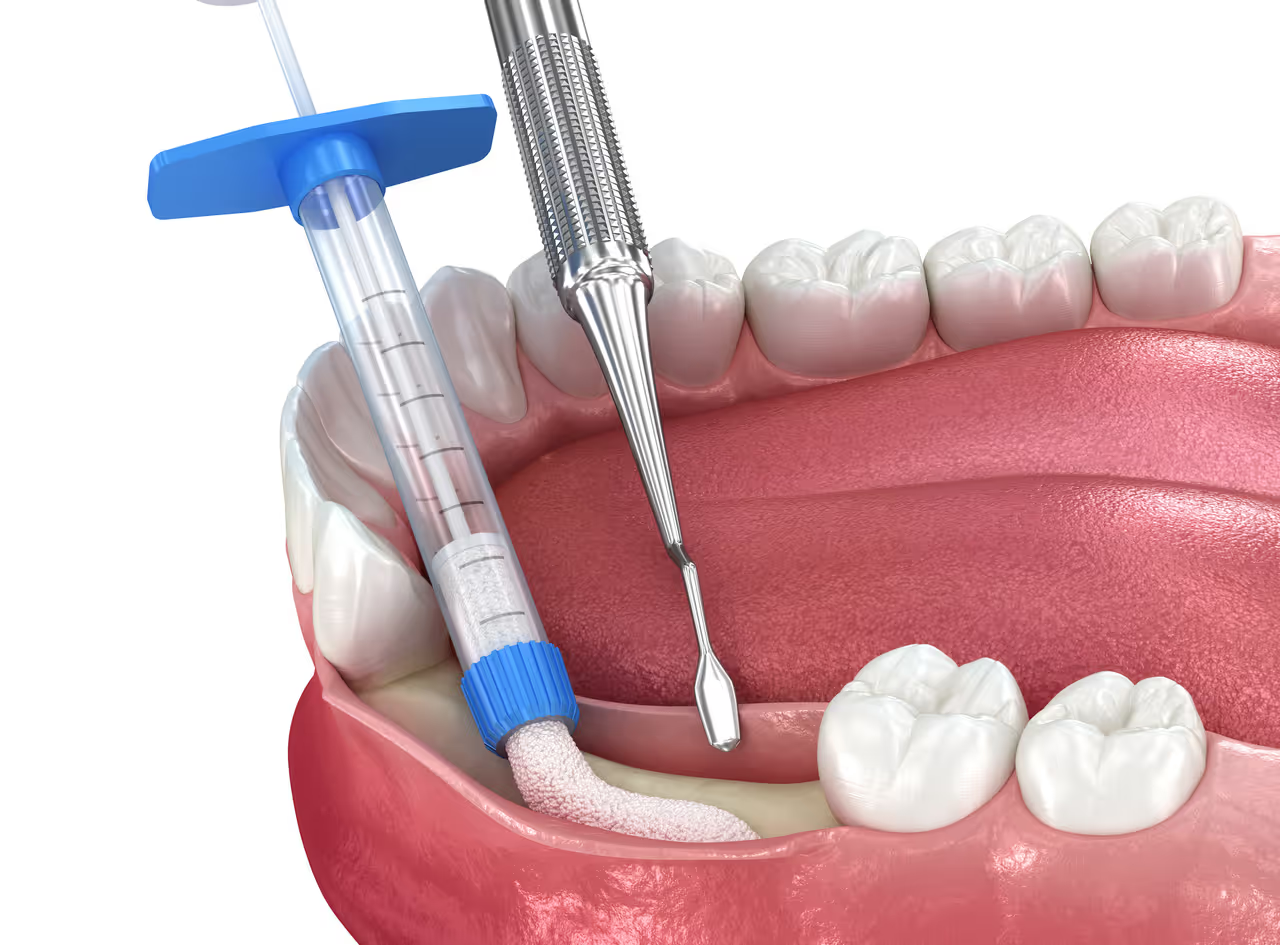
One of the most effective times to place a bone graft is immediately after a tooth is removed. Socket preservation — also called alveolar ridge preservation — involves placing graft material into the empty socket right at the time of extraction. This helps maintain the natural contour of the bone and dramatically reduces the amount of bone loss that would otherwise occur in the months before implant placement. For patients planning ahead, socket preservation in Pasadena is a straightforward step that can simplify your implant timeline significantly.
Advanced Technology for Precise, Predictable Results
Every bone grafting case at Joshua Dental begins with a 3D CBCT (cone beam CT) scan that gives Dr. Lee a detailed, three-dimensional view of your jawbone. This level of imaging allows for precise treatment planning — so the grafting procedure is targeted exactly where it is needed, and the path to computer-guided implant placement is as smooth and predictable as possible. Guesswork has no place in bone grafting, and our technology makes sure it stays that way.
Types of Dental Bone Grafts We Offer
Part of the Implants & Bone Restoration care continuum at Joshua Dental, our bone grafting services are tailored to each patient's specific anatomy and implant goals.
Socket Preservation (Alveolar Ridge Preservation)
Performed at the time of tooth extraction, socket preservation places bone graft material directly into the empty socket to maintain bone height and width. Without this step, the ridge can lose a significant portion of its volume within just a few months. Socket preservation is one of the most common jaw bone graft procedures in Pasadena and is often the simplest way to stay on track for implants.
Jaw Bone Grafting for Implant Placement
When bone loss has already occurred — whether from past extractions, gum disease, or long-term tooth absence — a jaw bone graft rebuilds the volume needed for implant placement. Dr. Lee uses carefully selected graft materials to stimulate your body's natural bone-regeneration process. Over the following months, your own bone grows into and fuses with the graft, creating a stable, living foundation for your dental implant.
Ridge Augmentation vs. Bone Grafting — Which Do You Need?
These two procedures are closely related but serve slightly different purposes. Bone grafting focuses on restoring bone volume at a specific site — typically where a tooth was lost or where an implant will be placed. Ridge augmentation addresses the broader shape and contour of the alveolar ridge, rebuilding its height and width to support implants across a larger area or to improve the appearance of the gum line. In some cases, both procedures are used together. Dr. Lee will review your 3D imaging and explain exactly which approach — or combination — fits your anatomy and your goals.
What to Expect from the Bone Grafting Process
Consultation and 3D CBCT Imaging
Your first visit begins with a thorough examination and a 3D CBCT scan. This imaging gives Dr. Lee a precise, three-dimensional map of your jawbone — its density, height, width, and any areas of concern. From there, he will walk you through exactly what he sees, what it means for your implant candidacy, and what type of grafting procedure is recommended. You will leave that appointment with a clear plan, not a pile of questions.
The Grafting Procedure — Step by Step
On the day of your grafting procedure, the area is numbed with local anesthesia. If you have chosen sedation, your comfort medication is administered before treatment begins. Dr. Lee then carefully prepares the graft site, places the bone graft material, and closes the area to allow healing to begin. The procedure typically takes less than an hour for straightforward cases. Sedation options — including IV sedation, oral conscious sedation, and general anesthesia — are available in-house for patients who want to be fully relaxed throughout.
Recovery, Healing Timeline, and Next Steps Toward Implants
Most patients experience mild swelling and soreness for a few days after grafting, which is well managed with prescribed or over-the-counter pain relief. Dr. Lee will give you specific post-procedure care instructions and a follow-up schedule to monitor healing. The graft material gradually integrates with your existing bone over a period of several months — typically three to six months, depending on the extent of the procedure. Once healing is confirmed through follow-up imaging, you are ready to move forward with implant placement.
Frequently Asked Questions About Bone Grafting in Pasadena
Question text goes here
Answer text goes here
Am I a candidate for bone grafting?
Most patients who have experienced tooth loss, gum disease, or a traumatic dental injury are potential candidates for bone grafting. The best way to find out is through a consultation and 3D CBCT scan, which gives Dr. Lee a precise picture of your existing bone volume and helps determine the right grafting approach for your situation. Being told you "don't have enough bone" for implants is not a final answer — it is the starting point for a conversation about what bone grafting can do for you.
How long does bone graft healing take before I can get an implant?
Healing timelines vary depending on the size and location of the graft, but most patients need to allow three to six months for the grafted bone to fully integrate before implant placement. Some smaller grafts may heal more quickly, while more extensive procedures may require additional time. Dr. Lee will give you a personalized timeline during your consultation so you know exactly what to expect and can plan accordingly.
Is bone grafting painful? What sedation options are available?
The procedure is performed under local anesthesia, and most patients report minimal discomfort during the grafting itself. Postoperative soreness is typically mild and manageable with standard pain relief. For patients who feel anxious about the procedure, Joshua Dental offers IV sedation, oral conscious sedation, and general anesthesia — all administered in-house — so you can be as comfortable as possible from start to finish.
Does insurance cover dental bone grafts?
Coverage varies widely depending on your plan and the clinical reason for the graft. Some dental insurance policies cover bone grafting when it is deemed medically necessary, while others treat it as a separate or limited benefit. Visit our Insurance & Financing page for more information on navigating coverage, or ask our team during your consultation — we are happy to help you understand your options before treatment begins.
Can bone grafting be done the same day as a tooth extraction?
Yes — in many cases, socket preservation grafting can be performed at the same appointment as your tooth extraction. Placing graft material immediately after extraction helps maintain bone volume and sets the stage for a smoother implant placement later on. This approach can reduce the overall time between extraction and your final implant, and it avoids the more significant bone loss that can occur when extraction sites are left ungrafted. Dr. Lee will assess your specific situation and let you know if same-day grafting is the right choice for you.
Ready to Schedule Your Visit?
Bone grafting for dental implants in Pasadena is one of the most impactful steps you can take toward a complete, confident smile — and at Joshua Dental, it is handled with the same personal care and in-house expertise that defines every procedure Dr. Lee performs. If you have been told implants are not possible because of bone loss, we would like the chance to show you what is actually possible.