Coronectomy Dental Procedure in Pasadena, CA — Joshua Dental
If your dentist or a scan has flagged a deeply positioned wisdom tooth near an important nerve, you may have been told that a coronectomy — rather than a full extraction — could be the right approach. This is a precise, protective procedure, and the good news is that you do not need a referral to have it done. Dr. Joshua Lee, DDS performs the coronectomy dental procedure Pasadena patients need entirely in-house at Joshua Dental, with same-day consultations available through our online scheduling system. You can get real answers and a clear path forward without being sent to a separate specialist's office.
What Is a Coronectomy?
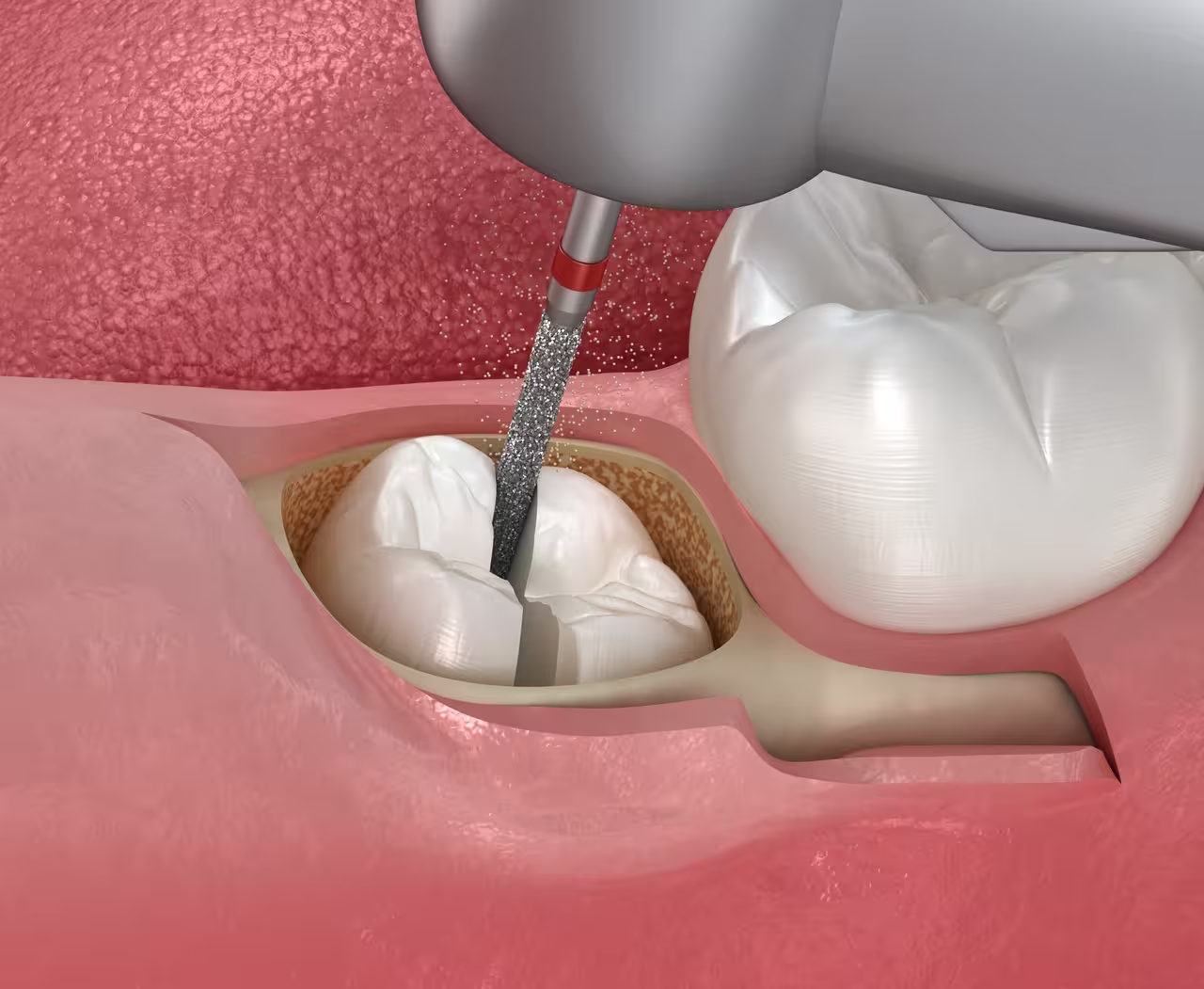
A coronectomy is a surgical procedure in which only the visible crown portion of a problematic wisdom tooth is carefully removed, while the roots are intentionally left in place beneath the gum line. The name comes from the Latin word for crown — "corona" — which describes exactly what is taken and what is not.
This may sound unusual at first. Most people assume a tooth removal means removing the whole tooth. But in certain situations, leaving the roots where they are is the clinically protective choice, not a compromise.
How a Coronectomy Differs From a Standard Extraction
In a standard tooth extraction, the entire tooth — crown and roots together — is removed from the socket. For most teeth, this is straightforward and safe. A coronectomy, by contrast, is a deliberate partial tooth extraction in which the roots are sectioned from the crown and left undisturbed in the bone. The surgical site is then closed and allowed to heal. Over time, the retained roots typically remain stable and may gradually migrate upward and away from the nerve they were originally positioned too close to.
Who Is a Candidate for a Coronectomy?
Candidacy is determined by imaging — typically a 3D CBCT scan, which Joshua Dental has available in-house. You may be a candidate if:
- Your lower wisdom tooth roots are positioned very close to or appear to contact the inferior alveolar nerve
- Imaging suggests that a full extraction carries a meaningful risk of nerve injury
- The tooth itself is not actively infected at the root level (active infection generally rules out a coronectomy)
- You are in good general health and able to heal normally following a surgical procedure
Dr. Lee will review your imaging and clinical history at your consultation to determine whether a coronectomy is appropriate for your specific situation.
Why Coronectomy May Be the Safer Choice for Your Wisdom Tooth
Protecting the Inferior Alveolar Nerve
The inferior alveolar nerve runs through the lower jaw and is responsible for sensation in your lower lip, chin, and teeth. When a wisdom tooth root sits directly on or wraps around this nerve, a full extraction carries a real risk of stretching, bruising, or — in rare cases — permanently damaging it. Symptoms of nerve injury can include numbness, tingling, or altered sensation that may last for months or, in some cases, longer.
A coronectomy is specifically designed to avoid disturbing the nerve entirely. By leaving the roots in place, Dr. Lee eliminates the manipulation that poses the greatest risk to the nerve during a conventional extraction.
Benefits of Keeping the Root in Place
Beyond nerve protection, there are other reasons this approach may work in your favor:
- Reduced surgical trauma Because the roots are not elevated or removed, the overall tissue disruption is often less than a full extraction.
- Smoother recovery. Many patients find that recovery from a coronectomy is more comfortable than they expected, with less swelling and a shorter return to normal activity.
- Long-term stability. Research consistently shows that retained roots from a coronectomy remain stable in the vast majority of cases and rarely require further intervention.
- Preserved bone. Leaving roots in the jaw helps maintain the surrounding bone structure over time.
Coronectomy vs. Full Wisdom Tooth Extraction — Which Is Right for You?
Both procedures are performed in-house at Joshua Dental as part of our oral surgery and extractions services, and both may be appropriate depending on your anatomy and clinical picture.
When Full Extraction Is Still the Better Option
A coronectomy is not the right choice for every patient with a problematic wisdom tooth. Dr. Lee may recommend a standard wisdom tooth removal or a full tooth extraction when:
- The wisdom tooth is actively infected, including at the root level
- The tooth is partially erupted and causing repeated soft-tissue infections (pericoronitis)
- The roots are not in close proximity to the nerve and a full extraction carries minimal risk
- The tooth is mobile or structurally compromised in a way that makes partial removal impractical
- Imaging shows that root position makes a clean coronectomy difficult to perform safely
The goal is always to choose the approach that gives you the best outcome with the least risk — not to default to one procedure over another.
What Happens If a High-Risk Wisdom Tooth Is Left Untreated
Choosing not to address a problematic wisdom tooth — whether through coronectomy or extraction — is rarely a neutral decision. A deeply impacted lower wisdom tooth that is left in place can lead to:
- Recurring pain and pressure in the back of the jaw
- Infection of the surrounding gum tissue
- Damage to the adjacent second molar, including decay or root resorption
- Cyst formation around the impacted tooth, which can cause bone loss over time
- A more complex surgical situation later, when the tooth may be even harder to manage
Addressing the issue when it is first identified — with the right procedure for your anatomy — is almost always easier and safer than waiting.
Book Your Coronectomy Consultation Online
What to Expect During Your Coronectomy at Joshua Dental
The Procedure Step by Step
Your comfort and confidence throughout the process matter to us. Here is what the coronectomy experience looks like at Joshua Dental:
- Consultation and imaging: Dr. Lee reviews your 3D CBCT scan and clinical history to confirm that a coronectomy is the appropriate approach and to plan the procedure precisely.
- Anesthesia, Local anesthesia is administered to the treatment area so you will not feel pain during the procedure. Sedation options are available if you would prefer a more relaxed experience — your options will be discussed at your consultation.
- Crown removal. The gum tissue is gently reflected to expose the tooth. The crown portion is carefully sectioned and removed, leaving the roots undisturbed.
- Site preparation. The exposed root surface is smoothed slightly, and the surgical site is cleaned and closed with sutures.
- Recovery guidance. Before you leave, you will receive clear aftercare instructions and have the opportunity to ask any questions.
The procedure itself typically takes under an hour for most patients.
Recovery Timeline and Aftercare
Most patients manage recovery comfortably with rest, soft foods, and prescribed or over-the-counter pain relief. Here is a general timeline
- Days 1–2: Some swelling and mild soreness are normal. Ice packs and keeping your head elevated can help.
- Days 3–5: Discomfort typically decreases noticeably. Most patients feel ready to return to work or normal activities.
- Week 1–2: Soft-tissue healing progresses. Avoid hard, crunchy, or chewy foods until cleared by Dr. Lee.
- Follow-up: A follow-up appointment allows Dr. Lee to confirm healing is on track and that the retained roots are stable.
Periodic imaging in the months and years following the procedure helps monitor the roots over the long term.
Frequently Asked Questions About Coronectomy
Question text goes here
Answer text goes here
Is a coronectomy painful?
Most patients are surprised by how manageable the procedure feels. Local anesthesia is used throughout, so you should not feel pain during the surgery itself. Mild soreness and swelling in the days that follow are normal and typically respond well to over-the-counter pain relief and prescribed medication.
Will I need sedation for a coronectomy?
Sedation is not required for a coronectomy, but it is available at Joshua Dental for patients who prefer a more relaxed experience. Dr. Lee offers multiple sedation dentistry options in-house — including oral conscious sedation and IV sedation — and your comfort needs will be discussed at your consultation so you can choose the approach that feels right for you.
Can the retained root cause problems later?
In the majority of cases, the retained roots remain stable and cause no issues. Over time, the roots may gradually migrate away from the nerve, which is actually a favorable outcome. Dr. Lee monitors retained roots with periodic imaging to confirm they are behaving as expected and to catch any changes early.
How long does coronectomy recovery take?
Most patients feel comfortable returning to normal daily activities within three to five days. Full soft-tissue healing generally takes one to two weeks. Because the roots are not disturbed, recovery is often smoother than a full wisdom tooth extraction, though every patient heals at their own pace.
Does insurance cover a coronectomy?
Coverage varies depending on your plan. Some dental insurance policies classify a coronectomy similarly to a surgical extraction and may provide partial benefits. We recommend contacting your insurance provider before your appointment, and our team is happy to help clarify what your plan may cover. Visit our Insurance & Financing page for more information on how we work with patients on coverage and payment options.
Ready to Schedule Your Visit?